What is blue-green infrastructure?
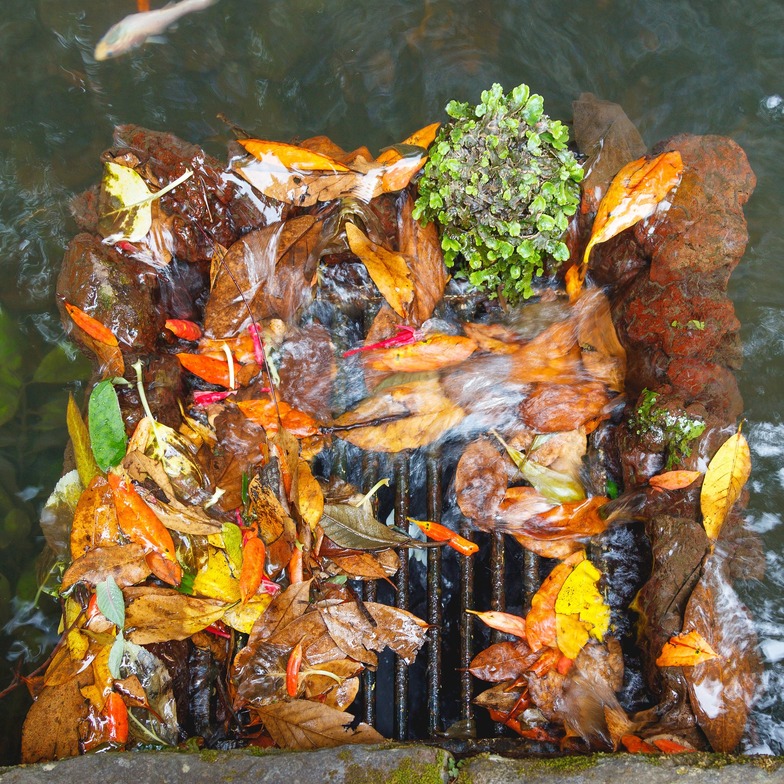
It’s that beautiful time of year when all the leaves turn into multitudes of colours, then drop and clog up street drains. Which, of course, can then cause flooding and sewer backups in streets and in homes.
Blue-green infrastructure was adapted in response to climate change and has now been in use worldwide during the last 15-20 years. The purpose of this infrastructure is to reduce the amount of water pooling around in the street (blue) and redirect it to where it’s needed: the soil beneath the trees (green).
Examples of blue-green infrastructure:
Blue-green infrastructure works at every scale, from a single street tree to a whole floodplain.
- Street trees fed by curb runoff. Runoff from the road is directed into the soil beneath the tree instead of the drain.
- Rain gardens and swales. Planted hollows and channels that hold runoff and let it soak in.
- Constructed wetlands. Shallow, planted water bodies that hold and slowly release flows.
- Green roofs and walls. Planting on buildings that holds rain and cools the surface.
- Permeable paving. Surfaces that let rain through to the ground below.
- Naturalised creeks and floodplains. Concrete channels returned to living waterways with room
Source of examples:
Vancouver planning options:
- https://sustainabletechnologies.ca/app/uploads/2023/01/2022-STEPS-FALL.pdf
- https://vancouver.ca/home-property-development/blue-green-systems.aspx
As you go about your activities, consider meandering by the following areas to see how the city has transformed certain landscapes:
* Richard Street from Dunsmuir to Pacific Street
* St. George Street rainway from Broadway to 5th Avenue
* Sunset Park along Prince Edward Street
* The curved corner where MacDonald Street meets Point Grey Road
Fun fact for kids: Did you know that the water we have today is all the same water that was around when dinosaurs roamed the earth?