WE ARE ALL IN THIS TOGETHER — WEEK THREE




The response this past week has been tremendous. Truly.
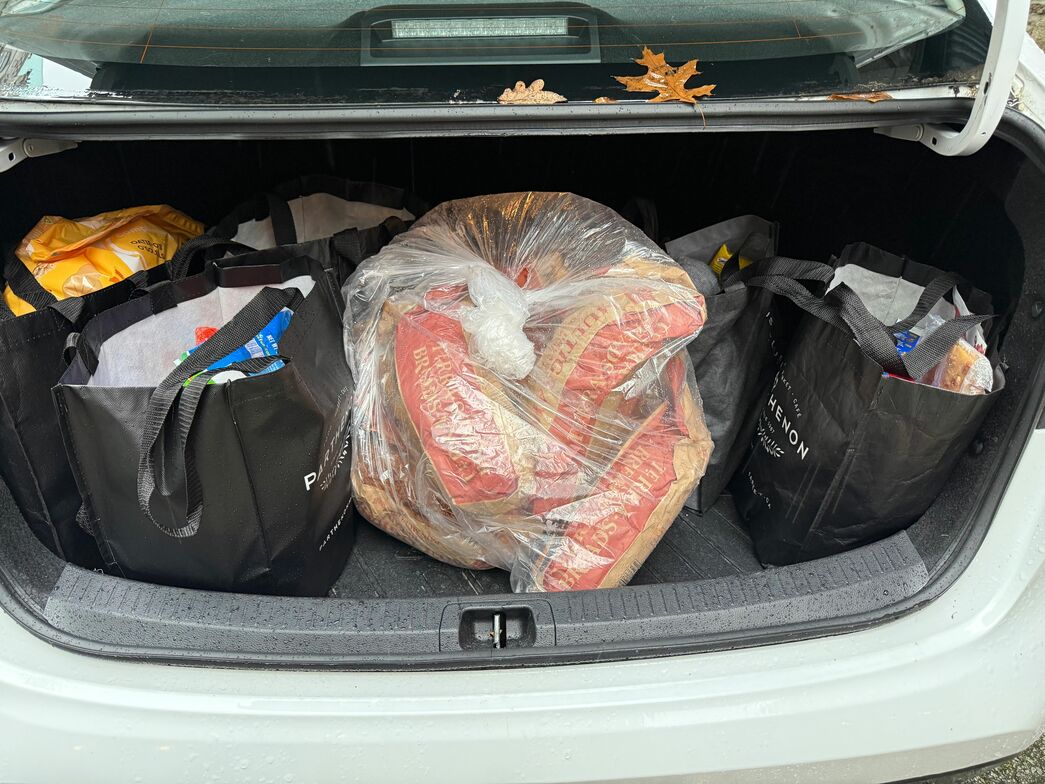
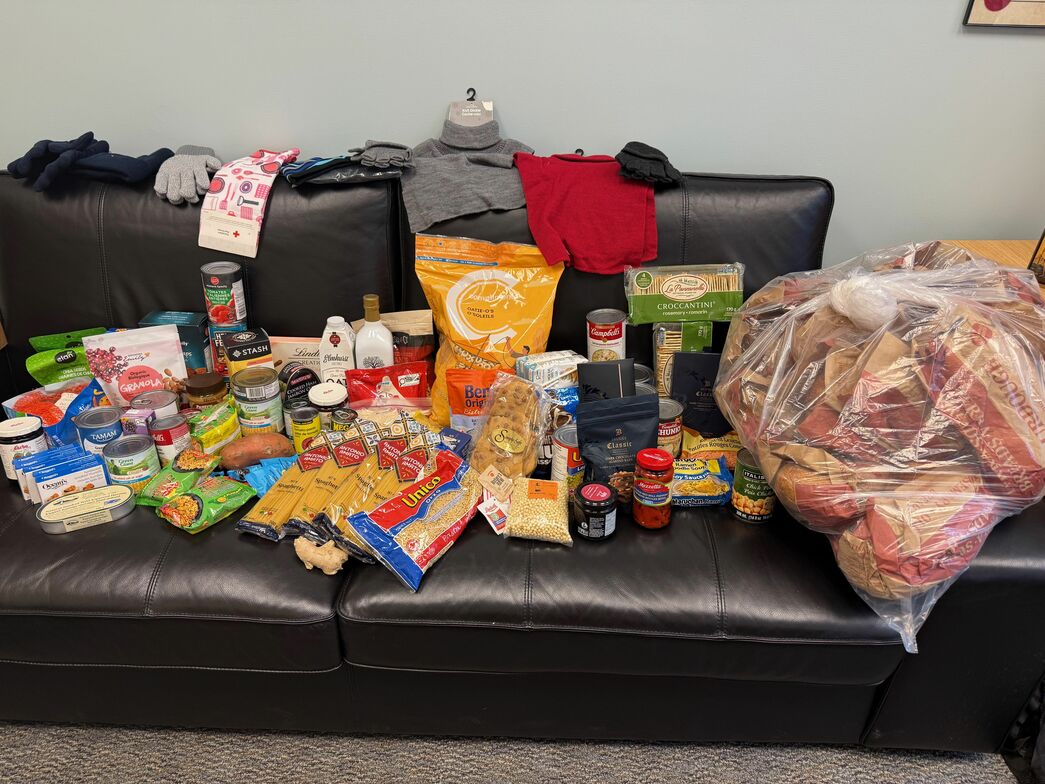
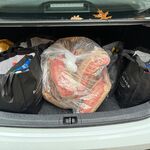
The bin in the narthex overflowed with donations — canned goods, dried staples, soups, beans, pasta, cereals. Three times I emptied it, and each time the food stacked so high on the couch in my office it looked as though a small grocery store had moved in. Add in the twelve loaves of donated bread and what you offered became five full grocery bags and then some.
Kudos to the Cathedral community — and to those connected with us in ways seen and unseen — who stepped forward to feed the hungry. You have served Christ’s poor with generosity that made me stop more than once and simply breathe out a prayer of gratitude. I am overwhelmed by your support.
And then came the practical challenge:
How do I get five bulging bags of food up the hill to Vine and 7th on my bike?
That’s where community came in — that deep Anglican commitment to seeking and serving Christ in all persons, loving neighbour as self. The car-share co-op Modo stepped forward and donated the use of a vehicle so I could drive the food up to the pantry. I didn’t know it, but Modo regularly looks for ways to support the wellbeing of local communities through charitable partnerships. My thanks to Jane Hope, their Director of Marketing & Communication, for making this possible. It was a small act of institutional kindness, but one that made a very real difference.
Christ feeding the five thousand began with one small act like this:
a boy bringing forward five loaves and two fish, not knowing what Jesus would do with them.
God has always delighted in taking what we offer — however small, however ordinary — and multiplying it into abundance.
A Moment of Community at the Pantry
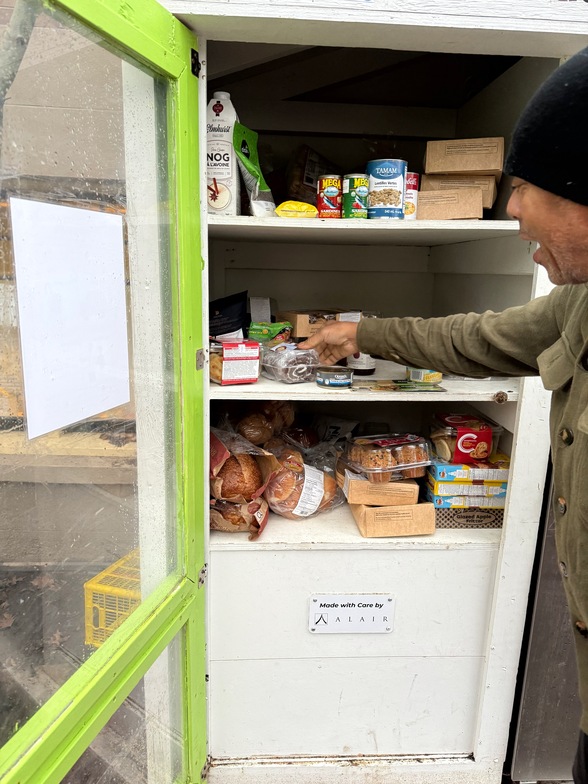
Later in the week, I stopped by the pantry and found a woman unloading bags of bread and baked goods. She looked up and asked if I could help her. She said, “You’ll be able to get some good items.” I laughed and said I was delivering, not collecting, but I’d gladly lend a hand.
At that moment a man wandered over — a little worn at the edges, carrying the unmistakable fatigue that life can press onto someone. He offered to help too. Side by side we emptied bags and boxes, arranging loaves and tins on the shelves.
Then another man arrived, also looking like he’d known hard days. And shortly after, a young woman came by pushing a stroller. The first fellow called out, “Do you need some food? There’s a lot right now!”
She thanked him.
The other man added, “Better get it while it’s here. It never lasts more than an hour.”
Then he looked at me with a sad sort of smile — not angry, just matter-of-fact — the kind of knowing that comes from living close to the edge.
For a few minutes we were all there together — a cluster of strangers who, in the eyes of the world, might never intersect: a priest with grocery bags, two men who have seen harder seasons, a young mother, and a kind stranger who bought and brought what she could.
In that moment, something like the Kingdom flickered among us.
No judgement, no shame, no hierarchy.
Just people feeding people.
The woman who had dropped the food said she’d come at various times and it was always empty. “There is real need here,” she said quietly. She is right.
Why This Matters — and Why It’s Missional
Jesus does not send the crowds away when food runs out.
He tells the disciples, “You give them something to eat.”
It remains one of the clearest instructions in the Gospel.
And it sits at the heart of Anglican Social Theology:
that faith is not merely private comfort but public responsibility;
that the Church is most itself when it stands with those on the margins;
that human dignity is not negotiable;
that the image of God in every person calls forth our care.
This little pantry — this small wooden structure tucked beside a community centre — has become a place where these truths are lived rather than preached. Where the Body of Christ discovers itself not only inside the walls of the Cathedral but on a sidewalk in Kitsilano, next to a stroller, beside someone’s worn backpack, in the hands that pass a loaf of bread from one person to another.
And here is the astonishing thing:
I think more people are dropping off food now.
Maybe it’s the season.
Maybe word is spreading.
Maybe people are simply seeing what they had not noticed before.
But I believe it is also this:
When you begin feeding people, you draw others into a circle of grace.
You awaken something deep and God-given — the joy of generosity,
the privilege of serving Christ in the hungry and the broken,
the simple holiness of caring for one another.
Where We Go from Here
We cannot stop now.
The need is real.
The shelves empty in under an hour.
And every time they do, Christ’s people — young and old, housed and unhoused, wage-earners and pensioners — come hoping for daily bread.
And so, as the weeks unfold, I invite you once again:
bring what you can.
Give what you are able.
Let us continue feeding Christ’s beloved ones together.
This is the work of Advent —
to make room for Christ in the world,
to prepare a place where hope can take root,
to create a community where no one is turned away empty.
And it is the work of the Church every season:
to stand with the poor,
to proclaim good news to the hungry,
to embody the Kingdom in the most ordinary of acts —
a loaf of bread, a can of beans, a bag of rice handed across a threshold.
Thank you, Cathedral community.
You have shown me and our neighbourhood what love looks like in action.
May we keep feeding, keep noticing, keep hoping,
until that small pantry on Vine and 7th becomes not a sign of scarcity but a symbol of God’s abundance shared among us.